Hotels & Stays
Rome Stays with a Clear Plan for the Station and Evening Meals
For a Rome stay, draw two routes before comparing room photographs: the route from the station with your bags and the route home after dinner. They may point toward different neighborhoods. The best compromise depends on whether you have a brief stop between trains or several days to settle into the city.
Termini is an arrival advantage, not a complete itinerary
Rome's tourism office places Termini alongside the Esquilino and Monti areas in its neighborhood guidance. A room with a straightforward station approach can be valuable for a late arrival, an early onward train or a short stay with substantial luggage. Confirm the actual entrance and walk, rather than assuming every listing that says Termini is immediately beside the platform.
For a longer visit, examine what happens after the bags are unpacked. Plot your two main sightseeing days and a few places you might eat. The station journey happens at the ends of the stay; the daily walks happen repeatedly. Do not let a convenient first half-hour dictate an inconvenient three days.
Monti offers a different point of comparison, with its relationship to the Imperial Forums and its own squares and dining streets noted by Turismo Roma. If that part of the city anchors your plans, check an exact address there against the station-oriented option. Gradients, the building floor and the room's orientation still require property-level checking.
If you are arriving by another route, start again from the correct arrival point. A hotel chosen for Termini access has less automatic value when the actual transfer finishes elsewhere. Use the transport arrangement you will book, including its schedule and final stop, rather than an assumed airport connection.
Choose the evening you want to repeat
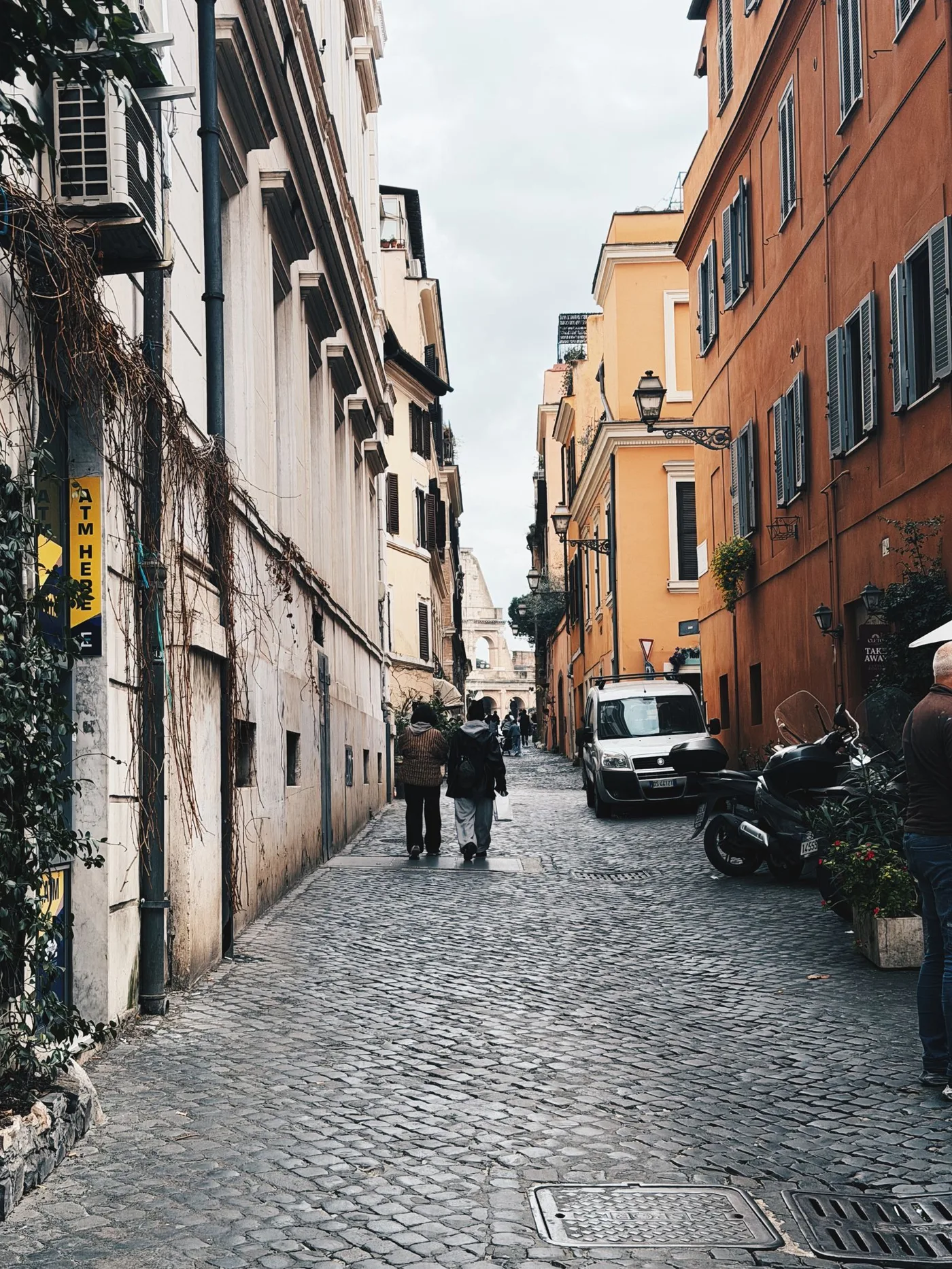
Trastevere is a meaningful option when its trattorias and lanes are part of your intended evenings, not simply a district name on a must-stay list. Prati offers another distinct base to investigate, especially when your chosen visits fall toward that side of the city. Neither choice means all of Rome will be at your doorstep.
Imagine finishing dinner and wanting nothing more complicated than returning to bed. Check the route to the room at that hour and decide whether walking, transit or a paid ride is realistic. If you will cross the city nightly, include those journeys in the comparison. A modestly cheaper room can become an expensive way to avoid planning the evenings.
Within your chosen area, ask about the booked room rather than relying on the property facade. An elevator may not remove all steps; a quiet-room request may not be guaranteed. Check the bathroom arrangement, cooling for your dates and whether breakfast is useful at your expected departure time.
For a one-night transit stop, a clearly managed arrival and departure may outweigh neighborhood atmosphere. For several nights, a location that supports meals and a midday rest can be worth more. Keep the first night deliberately simple: confirmed check-in, a nearby meal and no complicated sightseeing obligation. Rome will offer enough decisions the next morning without making the room itself one of them.